Costa Rica with kids: a family travel guide from the experts


We’ve been planning tailor-made family holidays to Costa Rica for over 40 years, and our team has first-hand experience of every region, lodge and activity we recommend. In this Costa Rica with kids guide, we’ll cover the best places to visit, what to do with kids of different ages, and the practical tips you need to plan your trip.
Why is Costa Rica good for families?
Costa Rica is good for families because it packs an extraordinary amount into a small area. You can move from tropical rainforest to volcanic hot springs to the beach in a matter of hours – which keeps things varied enough for even the most restless traveller.
The country has no army and is one of the safest places in Latin America. Costa Ricans – known locally as ticos – are famously welcoming, and children are treated as part of the community wherever you go. You’ll find high chairs in restaurants, car seats at rental car companies, and expert guides who know exactly how to pitch a wildlife tour to a seven-year-old.
Pura vida – which means ‘pure life’ – isn’t just a catchphrase. It’s how Costa Ricans live – at a relaxed pace, close to nature, with warmth and good humour. That laidback attitude makes travelling to Costa Rica with kids feel easy from the moment you land.
The eco tourism credentials are strong here, too. Around a quarter of the country is protected as national parks or reserves, and sustainable tourism is baked into the culture. It’s a place where kids learn about conservation just by being there.
Best places to visit in Costa Rica with kids
La Fortuna and the Arenal volcano
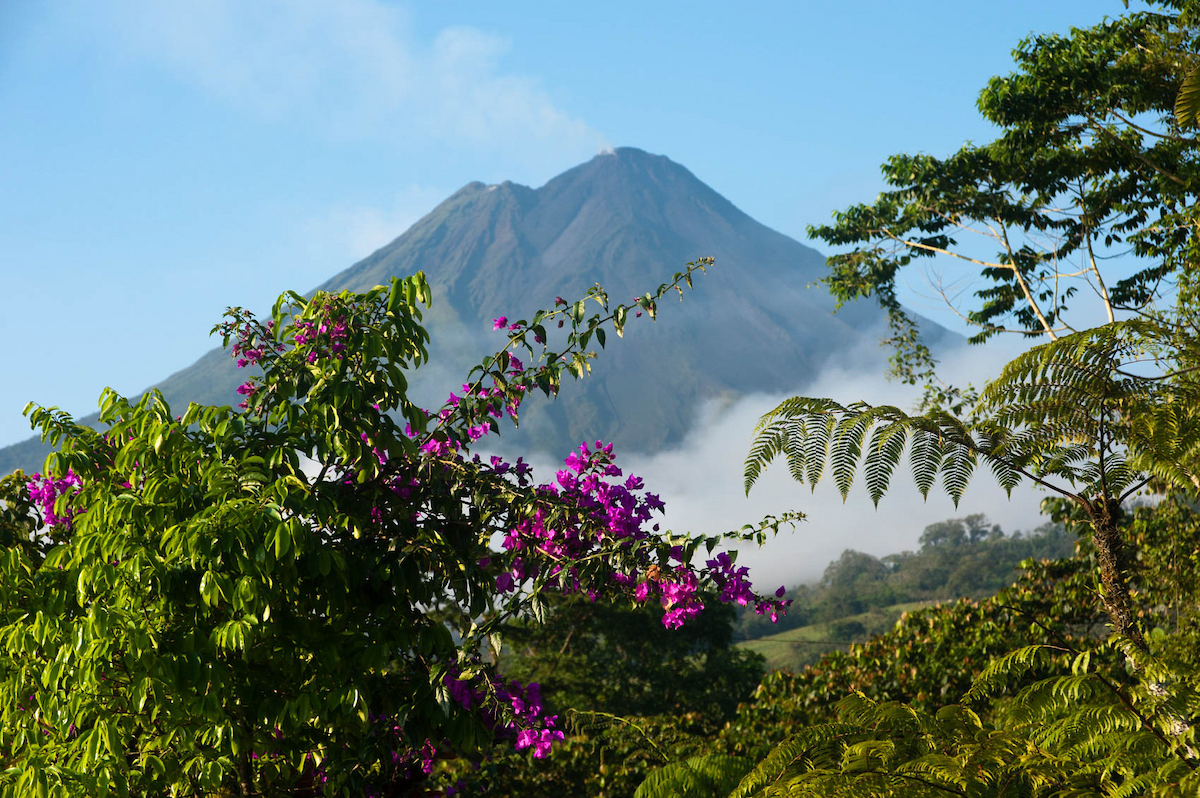
The Arenal volcano region is where most families start – and for good reason. The town of La Fortuna sits in the shadow of the volcano’s near-perfect cone, and the area is packed with family-friendly activities.
The highlight for most kids is the hanging bridges at Místico – a network of trails and suspension bridges strung through the rainforest canopy, with views of the volcano on a clear day. There’s a good chance of spotting howler monkeys, toucans and the odd sloth along the way.
After a morning of hiking, soak in one of the area’s natural hot springs. The springs resort at Tabacón is the most well-known, with pools of varying temperatures set among tropical gardens – younger kids tend to love it. For a less crowded (and less expensive) option, try Ecotermales, which limits visitor numbers.
La Fortuna waterfall is worth the 500-step descent. The water plunges roughly 70m into a pool surrounded by dense forest, and the climb back up is a good way to tire everyone out before dinner.
Other activities here include coffee tours, horseback riding along forest trails, and white-water rafting on the Balsa or Pacuare rivers. The minimum age for rafting varies by operator and river class, but most require children to be at least 10 for class III rapids.
Monteverde and the cloud forests
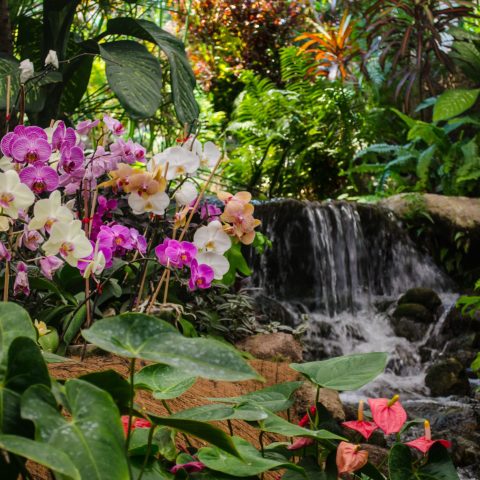
If Arenal is about volcanoes and springs, Monteverde is about mist, moss and birdsong. The cloud forests here sit above 1,400m and feel like something from another world – trees draped in orchids and ferns, with hummingbirds darting between the branches.
There are two main reserves. Monteverde Cloud Forest Reserve and the quieter Santa Elena Cloud Forest Reserve, which sits slightly higher and sees far fewer visitors. Both have well-maintained trails and knowledgeable guides who are excellent at spotting wildlife – keep your eyes peeled for the resplendent quetzal, one of Central America’s most striking birds.
Canopy tours are a big draw here. Zip lining over the forest canopy is the kind of thrill that older kids and teens will love, while the Selvatura Park hanging bridges offer a gentler alternative for younger kids who aren’t ready for the high wires.
A night walk through the reserve is another standout. Guides use red-filtered torches to pick out tree frogs, tarantulas and sleeping birds – it’s exciting for children of all ages – and their parents.
Manuel Antonio National Park
Manuel Antonio National Park is one of the country’s smallest national parks but arguably the most family-friendly. It combines white-sand beaches with tropical rainforest, and the wildlife is remarkably bold. White-faced capuchin monkeys wander the trails, iguanas sun themselves on the rocks, and you may spot sloths curled in the branches overhead.
The park limits daily visitor numbers, so it never feels crowded. Trails are flat and manageable, even for small kids, and the beaches inside the park are calm and sheltered – ideal for a swim after a morning walk.
Outside the park, you can kayak through the mangroves of the Damas Island estuary, take surf lessons at nearby beaches, or join a wildlife tour by boat to look for dolphins along the Pacific coast.
The Caribbean coast
For a change of pace, head to the Caribbean coast. Puerto Viejo and Cahuita have a laid-back, reggae-tinged atmosphere that feels completely different to the rest of Costa Rica.
Cahuita National Park is free to enter (donations welcome) and has a flat coastal trail through jungle that leads to a coral reef. Bring a snorkel – the water is calm and shallow, making it a great option for younger kids.
Sea turtle nesting is one of the coast’s big draws. On the Caribbean side, green turtles nest between July and October, while hawksbills arrive from March onwards. If you time your visit right, you may see hatchlings making their way to the water.
The food here is different, too. Caribbean-influenced cooking means rice and beans cooked in coconut milk, fresh fish, and patacones (twice-fried plantain). Even picky eaters tend to find something they like.
The central valley and San José
Most families fly into Juan Santamaría International Airport near San José. Rather than rushing straight out, it’s worth spending a night in the central valley to recover from the flight and adjust to the time zone.
The coffee-growing hills around San José are quietly scenic, and a half-day coffee tour gives older kids a sense of how Costa Ricans live and work. The Poás volcano – about an hour’s drive from the capital – has an easily accessible crater that’s one of the country’s most visited spots.
San José itself has a handful of worthwhile stops. The Mercado Central for a plate of casado (rice, beans, salad, plantain with meat or fish), and the small but excellent Pre-Columbian Gold Museum.
Santa Teresa and the Nicoya Peninsula
If your family holiday needs a beach wind-down, Santa Teresa on the Nicoya peninsula is where surfers and families converge. The beach is long, the sunsets are reliably spectacular, and surf lessons are available for children from around age five.
Santa Teresa has a more bohemian feel than the popular beach towns further north. The restaurant scene is varied – from sodas (local eateries) to international restaurants – and the pace is slow. It’s a great place to end a trip before heading home.
Corcovado National Park and the Osa Peninsula
Corcovado National Park is Costa Rica’s wildest corner – remote, species-rich and not for everyone. National Geographic once called the Osa Peninsula one of the most biologically intense places on Earth, and it lives up to that. Tapirs, scarlet macaws, all four of Costa Rica’s monkey species and – if you’re very lucky – jaguars.
This is better suited to older kids and active families who don’t mind basic facilities and early starts. Access is by small plane or boat, and the trails are rugged. But for families who want a real adventure, there’s nothing quite like it in Central America.
Where to stay in Costa Rica with kids
Accommodation in Costa Rica ranges from simple eco-lodges to polished boutique hotels, and we hand-pick every property on our itineraries. Here are some of the places we come back to for families.
Arenal and La Fortuna
Amor Arenal is a comfortable mid-range lodge with volcano views, a pool and spacious rooms that work well for families. Arenal Manoa sits on a larger property with gardens that attract birdlife – the volcano views from the pool are hard to beat. For a more upscale option, the Volcano Lodge offers family rooms and a pool.
Monteverde
Monteverde Lodge and Gardens is one of Costa Rica’s original upcountry lodges and still one of the best. Built in Scandinavian style with floor-to-ceiling windows, it looks out over the cloud forest. The landscaped gardens attract wildlife right to the property – a bonus for early risers with binoculars.
Manuel Antonio
There’s a wide range of options here. Villa Bosque has a colonial feel and sits a stone’s throw from both the national park and Espadilla beach – the pool has panoramic views of the surrounding forest. Falls Resort is a friendly mid-range option on a leafy hilltop 10 minutes’ walk from the coast, with gardens that attract monkeys and agoutis.
Caribbean coast
Tortuga Lodge in Tortuguero is an excellent jungle lodge on a private reserve, with comfortable Caribbean-style rooms, a pool and guided boat tours into the canals. Further south, Hotel Aguas Claras near Puerto Viejo is a beautifully designed boutique property on a quiet stretch of palm-fringed coast.
Central Valley
El Silencio Lodge is a luxury cloud forest retreat about 90 minutes from the airport. Each cabin suite has a private terrace, an outdoor Jacuzzi and forest views. It’s a peaceful first-night stop that feels a world away from the airport.
Osa Peninsula
La Leona Eco Lodge sits five minutes from the entrance to Corcovado National Park, with simple raised beachfront tents and an idyllic setting. For something more luxurious, Lapa Rios is a jungle lodge in a private reserve with superb wildlife – howler monkeys have been known to swing down onto the bungalow balconies.
We select every property based on location, comfort and how well it works for families. Browse our full Costa Rica accommodation or let us recommend the right fit for your family.
What to eat in Costa Rica with kids
Costa Rican food is honest, unfussy and built around fresh ingredients – which makes it much easier for families than you might expect.
Breakfast starts with gallo pinto, the national dish: rice and black beans sautéed with onion, pepper and coriander, then finished with a dash of Salsa Lizano – a tangy, slightly sweet sauce that’s been made in the town of Alajuela since 1920. It’s typically served alongside scrambled or fried eggs, fried plantain, fresh cheese and corn tortillas. It’s more filling than it sounds, and most kids take to it quickly.
Lunch revolves around the casado – a combination plate of rice, black beans, salad, fried plantain and a protein (chicken, fish, pork or beef). You’ll find casados at sodas (small, family-run restaurants) across the country, and they’re affordable, filling and freshly made.
For snacking, look out for patacones – slices of green plantain that are flattened and fried until crisp, then served with a garlic dipping sauce. They’re popular everywhere and hard to stop eating. Ceviche is another common snack, particularly in coastal areas – typically made with fresh corvina (sea bass) cured in lime juice with onion, coriander and chilli.
On the Caribbean coast, the cooking takes on a different character. Rice and beans here are cooked in coconut milk and often served with slow-cooked chicken or fish and a splash of Caribbean hot sauce. It’s richer and spicier than the Pacific Coast equivalent.
Fresh fruit is everywhere. Mango, papaya, pineapple, watermelon and less familiar options like cas (a sour guava-like fruit) and pejibaye (peach palm, with a texture somewhere between sweet potato and chestnut). Kids who won’t touch fruit at home often change their minds when it’s been picked that morning.
For picky eaters, there’s always rice, eggs, fresh bread, and good, simple chicken or fish. Most towns have at least a handful of international restaurants, and the popular beach towns like Manuel Antonio, Tamarindo, and Santa Teresa have a wide range of options.
Coffee is excellent and grown across the central valley – adults will appreciate it. Kids will probably prefer a batido – a fresh fruit smoothie made with water or milk, available at virtually every restaurant in the country.
Costa Rica with teens
Travelling to Costa Rica with teens is a different proposition from travelling with younger kids – and in many ways an easier one. The minimum age for most exciting adventure activities drops away, and the sheer range of things to do means you’re unlikely to hear: ‘I’m bored’.
Zip lining and canopy tours come into their own with older kids. The longest zip lines in the Arenal area run for several hundred metres over the forest canopy, and the adrenaline rush is the kind of thing teens talk about long after the holiday.
White-water rafting on the Pacuare River (class III–IV rapids) is another highlight for active families – the river cuts through a deep jungle gorge, and the scenery between rapids is as good as the rapids themselves.
Surf lessons at Santa Teresa or Tamarindo suit teens perfectly. Consistent waves, warm water and patient instructors mean most people are standing up within an afternoon.
For something quieter, snorkelling on the Caribbean coast, night wildlife tours in Monteverde, and even a multi-day hike in Corcovado all work well for this age group. The trick is building in enough free time alongside the activities – teens need downtime, too.
Costa Rica with younger kids
For families with younger kids (under seven or so), the key is keeping travel times short and building in rest days.
Manuel Antonio National Park is the standout – the trails are flat, the beaches are calm, and the wildlife is almost impossible to miss. Capuchin monkeys and iguanas often appear within the first 10 minutes.
The hanging bridges at Místico in Arenal are suitable for children who can walk independently, and the hot springs afterwards are a treat for the whole family. Most kids’ clubs at family-friendly lodges in this region accept children from age four.
Tortuguero National Park on the Caribbean coast is another good option – you explore by boat along narrow jungle canals, spotting caimans, monkeys and herons from the water. It’s relaxed, there’s no walking involved, and kids love the feeling of gliding through the forest.
Keep in mind that some activities have a minimum age requirement – zip lining and rafting typically require children to be at least seven to ten, depending on the operator. We’ll always flag these when planning your trip.
When to visit Costa Rica with kids
The rainy season and the dry season
Costa Rica has two main seasons. The dry season runs from mid-December to April, with the driest months being January to March. This is peak tourist season – expect higher prices, busier parks and the best beach weather.
The rainy season (May to November) is locally called the ‘green season’, and it’s not as off-putting as it sounds. Rain typically falls in short, heavy bursts during the afternoon, with mornings staying sunny and clear. Prices drop significantly, national parks are quieter, and the landscape is lush and green.
July and early August often bring a mini dry spell called the veranillo (little summer), making this a smart window for families travelling during the UK school holidays.
The Caribbean coast follows its own rhythm – September and October are actually the driest months on that side, while the Pacific coast gets its heaviest rain. So, timing your trip carefully lets you avoid the worst of the weather regardless of when you travel.
For UK families, the Easter holidays (dry season), summer holidays (veranillo or early green season) and October half term (Caribbean coast) all work well. We can advise on the best time to visit based on your dates.
How to get to Costa Rica
Most visitors fly into Juan Santamaría International Airport (SJO), near San José. British Airways operates direct flights from London, with a flight time of around 11 hours. There are also connecting options via European and US hubs with airlines like Iberia, KLM and American Airlines.
Costa Rica’s second international airport is Daniel Oduber (LIR) in Liberia, which is handy if you’re heading straight to the Guanacaste beaches or the Nicoya peninsula. There are no direct flights from the UK to Liberia, but connections via the US are straightforward.
Domestic flights within Costa Rica are short (around 30–45 minutes) and scenic – the small propeller planes fly low enough to see rivers, volcanoes and coastline below. They’re a practical way to skip long drives, especially with younger kids.
Getting around Costa Rica with kids
Rental car or private driver? A rental car gives you the flexibility to travel in Costa Rica at your own pace, and the country’s roads are generally well-maintained on the main routes. A 4WD is recommended, particularly in the green season when some rural roads can be muddy. Most rental car companies at SJO airport offer child seats and boosters.
The drive times between key destinations are manageable: San José to La Fortuna takes around three hours, La Fortuna to Monteverde around three and a half hours (partly unpaved), and Monteverde to Manuel Antonio around four hours.
For families who’d rather not drive, a private driver is a comfortable alternative. Your driver stays with you throughout, can spot wildlife along the way, and handles all the logistics. Shared shuttle buses connect most towns, too, though these are less flexible with small kids.
We can arrange either option – or a mix of both – depending on what suits your family.
Practical tips for a Costa Rica family trip
Language: Spanish is the official language, but English is widely spoken in tourist areas. A few words of Spanish go a long way – locals appreciate the effort, and kids enjoy trying.
Currency and costs: The local currency is the colón, but US dollars are widely accepted. Costa Rica isn’t a budget destination by Latin America standards, but the green season brings noticeably lower prices. Mid-range family rooms typically run from £80–180 per night.
Health and safety: Costa Rica is one of the safest countries in Latin America. Tap water is safe to drink in most towns. Standard travel precautions apply – take reasonable precautions with valuables, use insect repellent, and pack sun cream. Travel insurance is essential.
What to pack: Layers work best– lightweight, quick-dry clothes for the heat, a waterproof jacket for afternoon showers, and a fleece or warm layer for cloud forest altitudes. Sturdy walking shoes are a must, and reef-safe sunscreen is appreciated. If you’re visiting between June and November, a decent rain jacket earns its weight in your bag.
Costa Rica with kids: frequently asked questions
Is Costa Rica safe for kids?
Yes. Costa Rica is one of the safest countries in Central America and has no army. Petty crime exists in larger cities, as it does anywhere, but with reasonable precautions, it’s a very safe destination for families. Costa Ricans are warm and welcoming, and children are treated with real care wherever you go.
How long should a Costa Rica family trip be?
We’d recommend at least 10–14 days to see the highlights without rushing. Two weeks lets you combine the Arenal volcano region, a cloud forest, a national park and beach time at a comfortable pace. Shorter trips of 7–10 days work too – you’ll just need to be more selective about where you go.
Is Costa Rica suitable for toddlers and small kids?
Costa Rica works well with small kids if you plan carefully. Stick to shorter travel days, choose destinations like Manuel Antonio where trails are flat, and wildlife is easy to spot, and build in rest days. Many lodges have pools and family-friendly facilities. The main challenge is driving – some roads are bumpy, so keeping journeys under two hours helps.
What’s the best age to take kids to Costa Rica?
Costa Rica works at any age, but around seven to eight is ideal. Children are old enough to appreciate the wildlife, manage the walks, and start joining in with activities like zip lining and snorkelling. That said, families with younger kids have a brilliant time too – and teenagers tend to love the adventure activities.
Do I need to speak Spanish?
Not necessarily. English is widely spoken in tourist areas. But a few phrases in Spanish are always appreciated and can be a fun challenge for kids.
Can you do Costa Rica as a self-drive holiday?
Absolutely. Costa Rica’s main roads are well-maintained, and a self-drive holiday lets you explore at your own pace. A 4WD is recommended, especially in the green season. We can plan a self-drive Costa Rica itinerary with pre-booked accommodation and a suggested route, so you have the freedom without the hassle.
What vaccinations do I need for Costa Rica?
No specific vaccinations are legally required for entering Costa Rica from the UK (unless you’ve recently visited a yellow fever zone, in which case proof of vaccination may be needed). Routine vaccinations should be up to date, and some travellers opt for hepatitis A and typhoid cover. Check the latest guidance with your GP.
Why book a Costa Rica family holiday with Journey Latin America?
We’ve been the UK’s No.1 specialist in travel to Latin America since 1980. Our team has lived, worked and travelled extensively across the continent, and that first-hand knowledge is what makes the difference.
When you book with us, you get a dedicated travel expert who knows Costa Rica inside out – someone who can tell you which lodge has the best family rooms, which guide is brilliant with kids, and which route avoids the bumpy roads. We work with trusted local partners on the ground, so there’s always someone available if you need help during your trip.
Browse our Costa Rica holidays or get in touch to start planning your upcoming trip.
Tailor-made holidays
Flexible, custom-made holidays to Latin America created to match your exact requirements: our tailor-made itineraries are as unique as the clients for whom they are designed.
Design my tripPapagaio
Your edit for Latin American inspiration
Our exciting range of articles on Latin America explore everything from iconic destinations and lesser-known cultural gems to delicious traditional recipes. You’ll also find exclusive travel tips, first-hand client reviews and the chance to get your personal questions answered by our travel experts.
View Extraordinary Inspiration