Private Journeys
Undiscovered El Salvador and Nicaragua
19 days from £4,700pp
(based on two people sharing & excluding flights)
Itinerary
 Map
Map
Day 1
Arrive in San Salvador and transfer to your hotel.
You will be met at the airport by our local representative who will accompany you on the one-hour drive to your hotel in the capital’s quiet, upmarket Zona Rosa district.


Day 2
El Boqueron Volcano & San Salvador city tour
Drive up the steep mountain road which flanks San Salvador towards the peak of El Boquerón volcano for expansive views over the capital and surrounding countryside. Volcanic activity here in the past wreaked havoc on the city, but now you can take a short walk to the rim of the extinct volcanic crater, where a walkway offers impressive vistas into the crater, which is smothered in closely-packed foliage.
Established by the Spanish in 1525, San Salvador is a dynamic, cosmopolitan capital with a mélange of architectural styles reflecting its chequered history. The Plaza Gerardo Barrios forms the focal point of your walking tour, flanked by the National Palace, the striking National Library, and the Metropolitan Cathedral, which houses the tomb of Archbishop Óscar Romero who was assassinated in 1980 while celebrating Mass.


Day 3
Transfer to Ataco on the Ruta de las Flores.


Stay at -
Casa de Graciela
Day 4
Exploring the Ruta de las Flores & Coffee Tasting
Set off and explore the Ruta de las Flores, a 36‑kilometre winding mountain route linking Sonsonate to Ahuachapán and offering wonderful views at every turn. As the name suggests, you’ll pass fields of tropical flowers and nurseries that thrive in the cool, pleasant climate.
Steeped in cultural tradition, the Ruta de las Flores is worth visiting any day of the week, though its towns truly come alive at weekends. Your tour is flexible so you can make the most of the day and tailor it to your interests, whether that’s browsing craft markets, visiting historic churches (including one with a 16th‑century black statue of Christ), or joining the lively weekly food fair in Juayúa.
Rising from 250 to 2,365 metres above sea level, this fertile region produces some of the world’s finest coffee. You’ll have the chance to visit a coffee plantation, learning about cultivation, harvesting, and roasting before enjoying a fresh cup prepared using the traditional chorreador method, which strains the roasted coffee to bring out its most delicious aromas.


Stay at -
Casa de Graciela
Day 5
Transfer to Suchitoto via El Tazumal, Santa Ana & Joya de Ceren
Drive to the archaeological site of El Tazumal, El Salvador’s most significant ceremonial Mayan centre. Set in the heart of the small town of Chalchuapa, it’s a place where everyday life continues along the very streets once trodden by the Maya. Just outside the ruins stands a bust of Che Guevara, commemorating his visit in 1954.
Continue to Santa Ana, El Salvador’s second city, taking time to admire the National Theatre and the impressive Gothic cathedral that dominate the vibrant main square. From here, travel to the fascinating archaeological site of Joya de Cerén.
Drawing comparisons with Pompeii, the pre-Hispanic farming community of Joya de Cerén was buried in up to 20 feet of ash when the Laguna Caldera Volcano erupted in AD 600, and the incredibly well preserved remains offer an insight into the day to day lives of rural communities of the time: how they cultivated their crops, built their homes and cooked and stored their food. It was declared a UNESCO World Heritage Site in 1993 and houses an excellent museum with multilingual information boards.


Stay at -
Los Almendros de San Lorenzo
Day 6
Walking tour of Suchitoto.
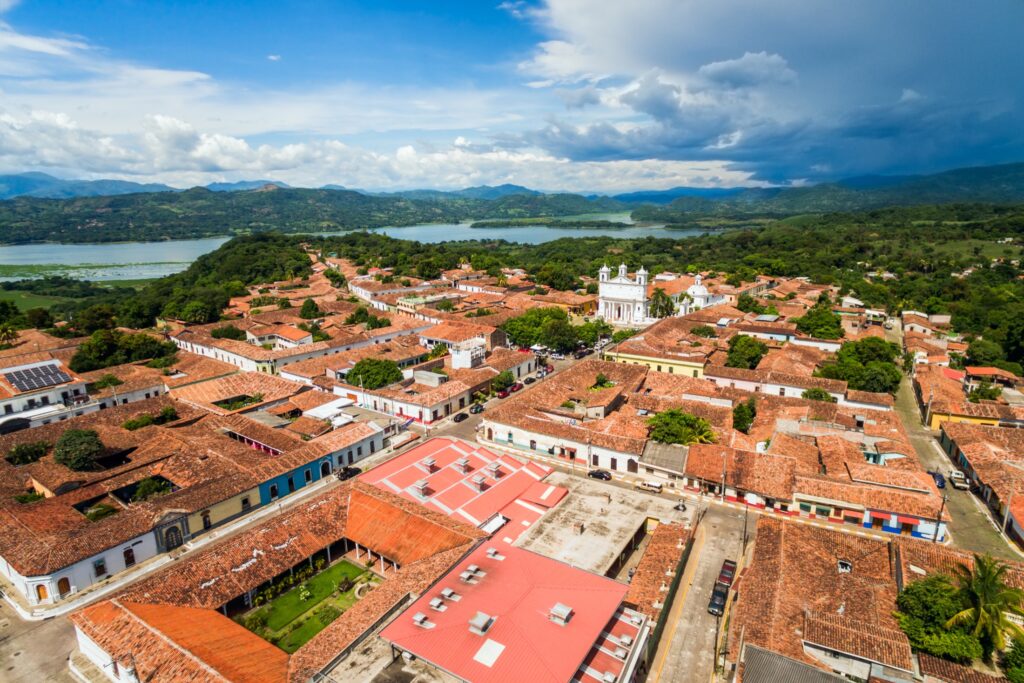
Suchitoto is a charming colonial town whose name in the native Nahuatl language means “place of birds and flowers” – and for good reason – vibrant flowers adorn every building and nearby Lake Suchitlán provides an important sanctuary for birdlife.
During El Salvador’s brutal civil war, Suchitoto was heavily affected. Fortunately, since the signing of the peace accords, extensive reconstruction has taken place, and today its cobblestone streets are a delight to wander.
On a leisurely 2–3-hour walking tour, you’ll explore the town’s principal attractions, including the striking white Santa Lucía Church, which dominates the main square. You’ll also discover Suchitoto’s rich cultural identity with visits to the Arte Para la Paz (Art for Peace) Museum and the Teatro Alejandro Cotto – named in honour of the filmmaker, writer, and poet who played a key role in shaping the town’s cultural life.

Stay at -
Los Almendros de San Lorenzo
Day 7
Transfer to Perquin.
Continue by private transfer (5 hours) to the historic town of Perquín, tucked away in the far north‑east of the country just a few kilometres from the Honduran border.
Perquín, a small town of only a few thousand residents, is best known for having served as the headquarters of the guerrilla movement during the civil war. Reminders of the conflict still remain, yet today it is a peaceful place with a pleasant climate, surrounded by low, forested mountains.


Stay at -
Perquin Lenca
Day 8
Visit Perquin's Museo de la Revolución and the nearby town of El Mozote.
Perquín forms part of the country’s Ruta de la Paz (Peace Route), which also includes other settlements closely linked to the armed struggle.
You’ll visit the town’s Museo de la Revolución, proudly run by former guerrilla fighters and filled with memorabilia from the conflict. The museum also features moving displays describing how this region was particularly affected, as well as an account of the life and assassination of Archbishop Óscar Romero, the revolutionary priest and martyr.
You’ll then travel to the nearby town of El Mozote to see its poignant memorial dedicated to the victims of a horrific massacre that occurred at the height of the civil war.


Stay at -
Perquin Lenca
Day 9
Transfer to La Union on the Gulf of Fonseca.
Continue by private transfer (3 hours) to La Unión, El Salvador’s principal port and an important regional trading hub. The city itself is somewhat ramshackle, but it enjoys a beautiful setting at the foot of the Conchagua Volcano and overlooking the Gulf of Fonseca.
Accommodation options in La Unión are limited, but your hotel – located a few kilometres outside the city with views across the Gulf of Fonseca – provides a more than adequate base for one night.
In the evening, head to Conchagua, a small town perched on the slopes of the volcano that shares its name. It’s a pretty place with a flower‑filled plaza centred around one of the oldest churches in the country. Here, you’ll learn how to make El Salvador’s most popular traditional dish, the humble pupusa, a thick corn pancake typically filled with cheese, refried beans, or meat.


Day 10
Boat across the Gulf of Fonseca to Nicaragua; continue by road to Leon.
Board a boat in the morning in La Unión for the 2½‑hour crossing of the Gulf of Fonseca to Potosí in Nicaragua. This is certainly the more adventurous way to travel between the two countries, as the ride can be a little rough and you may get splashed.
(It is possible to travel overland via Honduras, but UK passport‑holders require a visa to transit Honduras.)
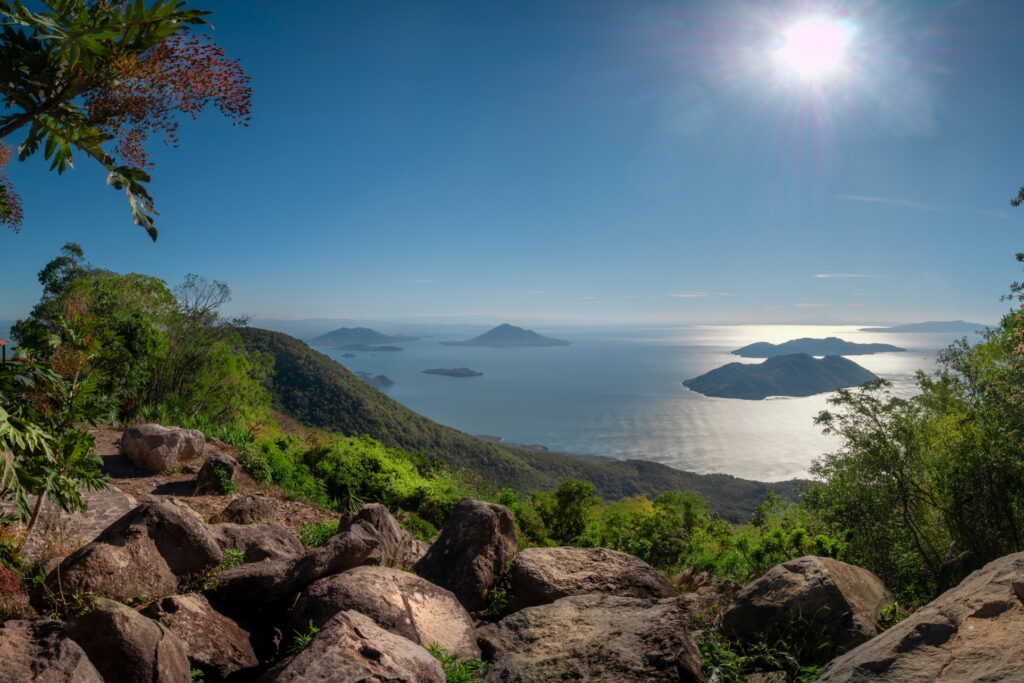
The Salvadoran and Honduran coastlines are dotted with small islands and backed by steep, verdant mountains. Along the way, you’ll see fishermen hauling in their catch, seabirds skimming the water’s surface, and, if you’re lucky, dolphins leaping and playing alongside the boat.
Once in Potosí, it’s a three‑hour drive to León, Nicaragua’s former capital, a city that still embodies much of the country’s ecclesiastical and intellectual heritage.

Stay at -
Hotel El Convento
Day 11
Walking tour of Leon.
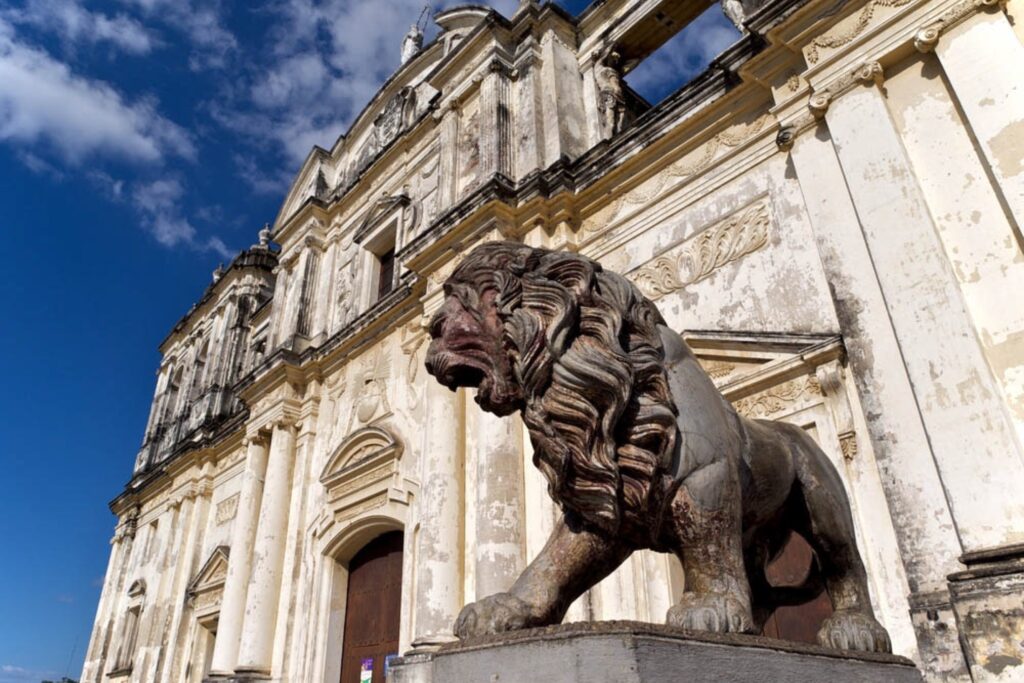
León is Nicaragua’s most ebullient city – energised by its university and a thriving intellectual and cultural life. It boasts a fascinating history: the original settlement at the foot of the Momotombo Volcano was founded in 1524 and later destroyed by an earthquake in 1609.
A walking tour reveals the tempestuous history of the modern-day city, a colonial masterpiece rivalled only by Granada, with its trademark adobe façades, narrow streets, and elegant squares dominated by a number of grandiose churches. These include the imposing Cathedral – the largest in the Americas – which took over 100 years to complete.
León also has a long history of alliance with revolutionary causes, and you’ll still see remnants of Sandinista murals painted during the revolt against the Somoza regime in the 1970s.

Stay at -
Hotel El Convento
Day 12
Transfer to San Jorge port; ferry to Ometepe Island.
Continue by private transfer (4 hours) across the country to the port of San Jorge on the western shore of Lake Nicaragua. Here, you’ll board a ferry for the one‑hour crossing to Ometepe Island.
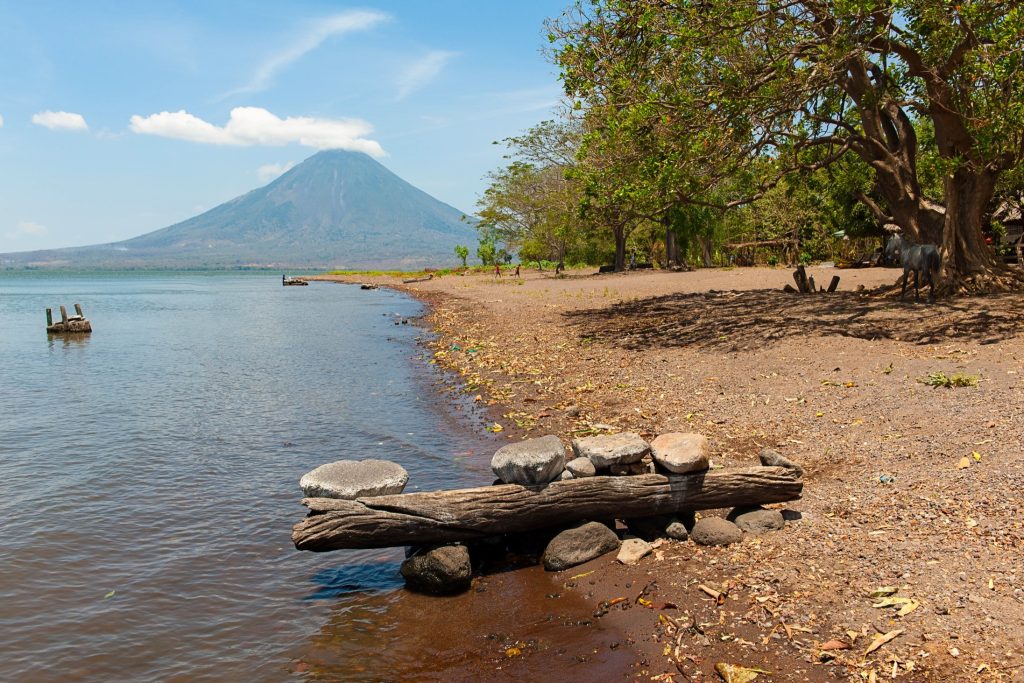
The relaxed, tranquil island rises majestically from Lake Nicaragua, dominated by its twin conical volcanoes, Concepción and Maderas. Thanks to its fertile volcanic soil, Ometepe is dotted with citrus, banana, watermelon, and avocado plantations, while its lush jungle vegetation provides a habitat for monkeys and a rich variety of bird species.
Life here has remained largely unchanged for decades, if not centuries, despite the upheavals caused by revolution and civil war elsewhere. And the fact that the island can only be reached by boat has helped maintain its enduring sense of remoteness.


Stay at -
Hotel Villa Paraiso
Day 13
Ometepe Island tour
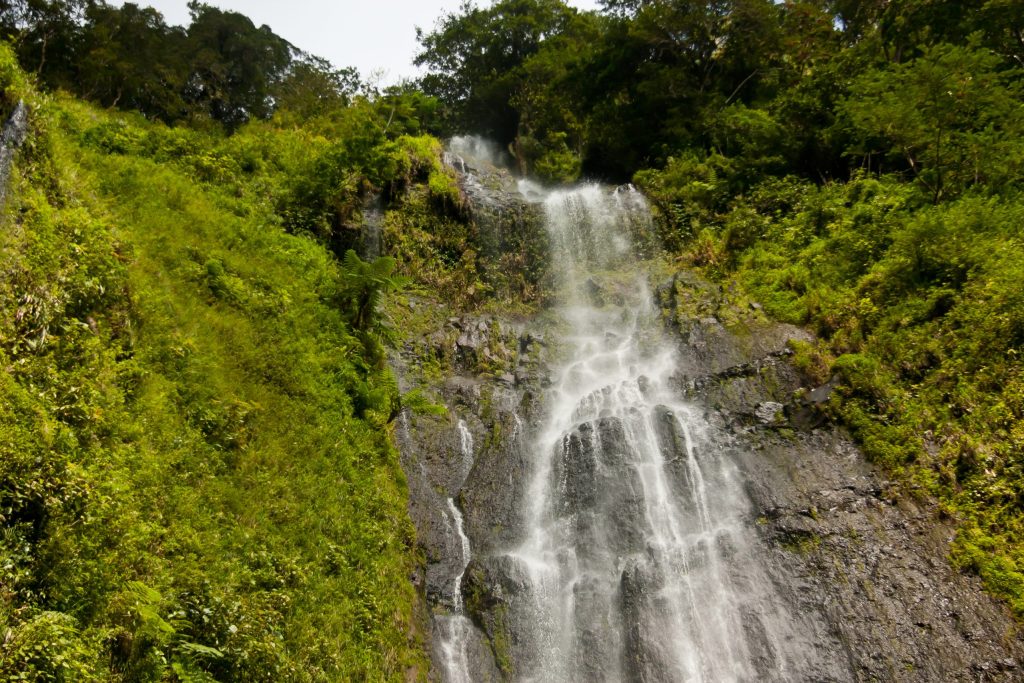
Your tour begins in the Charco Verde nature reserve where palm trees and densely packed, fruit-bearing tropical vegetation line the lakeshore, which is indented with small volcanic beaches. The reserve is enlivened by the presence of over 200 howler monkeys, as well as the calls of migratory and indigenous birds. A calm lagoon, dotted with mangroves and fallen trees, creates a fairy-tale atmosphere; the area is famous for its mythology.
Continue to the El Ceibo Pre-Columbian Museum, where archaeological displays showcase ancient artefacts found on the island, including intricate carvings of animals and people, alongside a numismatic collection of more than 3,000 pieces. Your day concludes with a refreshing swim in the crystal-clear waters of Ojo de Agua, a forest-fringed natural swimming pool.

Stay at -
Hotel Villa Paraiso
Day 14
At leisure on Ometepe Island - optional hikes and cycle rides available.
The two volcanoes that dominate Ometepe Island – Concepción (1,610m) and Maderas (1,394m) – offer excellent, albeit challenging, hiking opportunities. Reaching the summit and returning typically takes a full day, and on clear days you’ll be rewarded with breathtaking panoramic views of the Island, Lake Nicaragua, and beyond.
Peaceful and unhurried, Ometepe Island also lends itself beautifully to cycling. With little vehicular traffic, you can pedal through small villages, stopping at natural swimming holes as you explore the island on two wheels.
Or simply relax at your hotel – whether swaying in a hammock or unwinding on the lakeside beach – the choice is yours.

Stay at -
Hotel Villa Paraiso
Day 15
Return to San Jorge port by ferry; continue by road to the colonial city of Granada.
Return to the port of San Jorge by ferry and continue by private transfer (2 hours) to Granada. Founded in 1524, Granada lies at the foot of the Mombacho Volcano and is one of the oldest cities in the New World.
At its height, the city grew wealthy through the gold trade and was repeatedly plundered by pirates, and even razed by the American mercenary William Walker in the mid‑19th century. Despite this turbulent past, the city has been beautifully restored and its colourful colonial houses and cobbled streets, many of which lead down to the shores of Lake Nicaragua, are a delight to explore.


Stay at -
Hotel Patio del Malinche
Day 16
Granada city tour, boat trip on Lake Nicaragua & Masaya volcano at night.
Take a guided tour of Granada, visiting its colonial churches, strolling down narrow streets, and passing graceful historic houses. Many of the city’s highlights are located around the main square, including the beautiful baroque La Merced Church, the Casa de los Tres Mundos – now a cultural centre for local musicians and dancers – and the 16th‑century San Francisco Convent.
Granada sits on the shores of Lake Nicaragua, the second‑largest body of freshwater in the Americas. The lake stretches before you like an inland sea, its silky silver surface breaking into white‑tipped waves when the wind picks up. Embark on a small launch for a relaxing boat ride through the sheltered waters around the peaceful Isletas – hundreds of tiny, bright‑green, forested islands created by eruptions from the Mombacho Volcano that towers above the lake. Depending on the weather and time of day, you may spot abundant birdlife. Small fishing communities live among the islands, and a few host impressive weekend retreats owned by wealthy Nicaraguans.
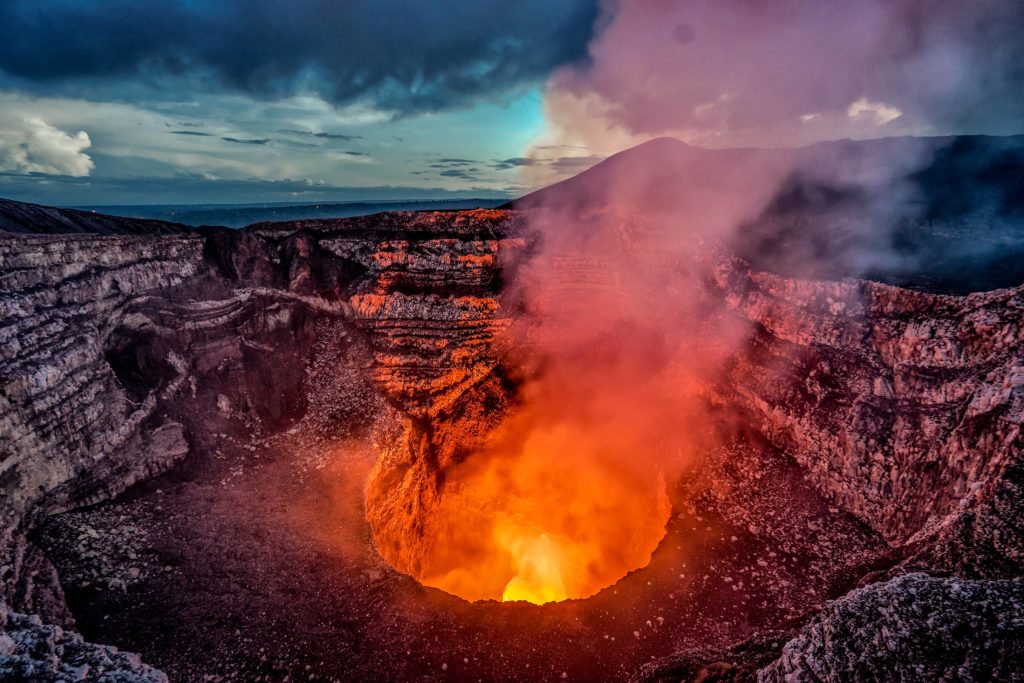
At sunset you’ll head to Masaya Volcano, a short distance from Granada, where visitors can peer into the volcano’s fiery crater to witness its red and glowing lava.

Stay at -
Hotel Patio del Malinche
Day 17
Transfer to San Carlos; travel by boat along Rio San Juan to El Castillo.
Continue by private transfer (5 hours) to San Carlos on the south-eastern shores of Lake Nicaragua. The liveliest part of this quiet and somewhat ramshackle town is down by the pier: ferries and private launches jostle for space with fishing boats.
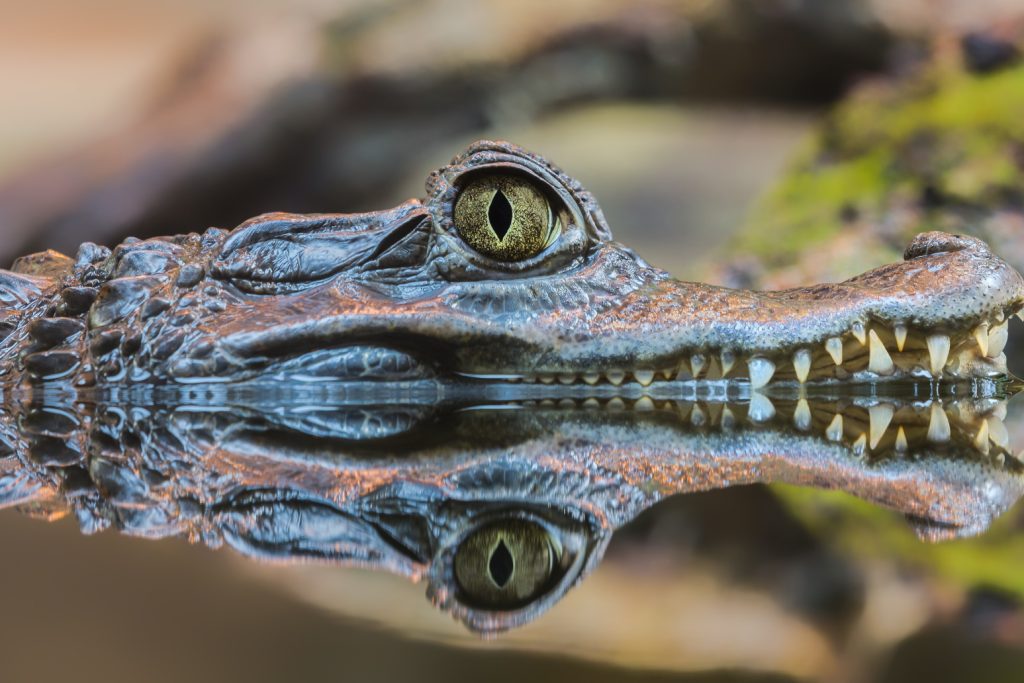
The boat journey to El Castillo takes about 1½ hours. Leaving San Carlos, the riverbanks are initially lined with maize fields and grazing cattle, punctuated by small jetties and rural homes. As you travel further downstream, the vegetation gradually gives way to dense tropical forest. There’s plenty of wildlife too: snowy ibis perch on overhanging branches and you may spot monkeys swinging through the taller trees and caiman basking on bare logs.
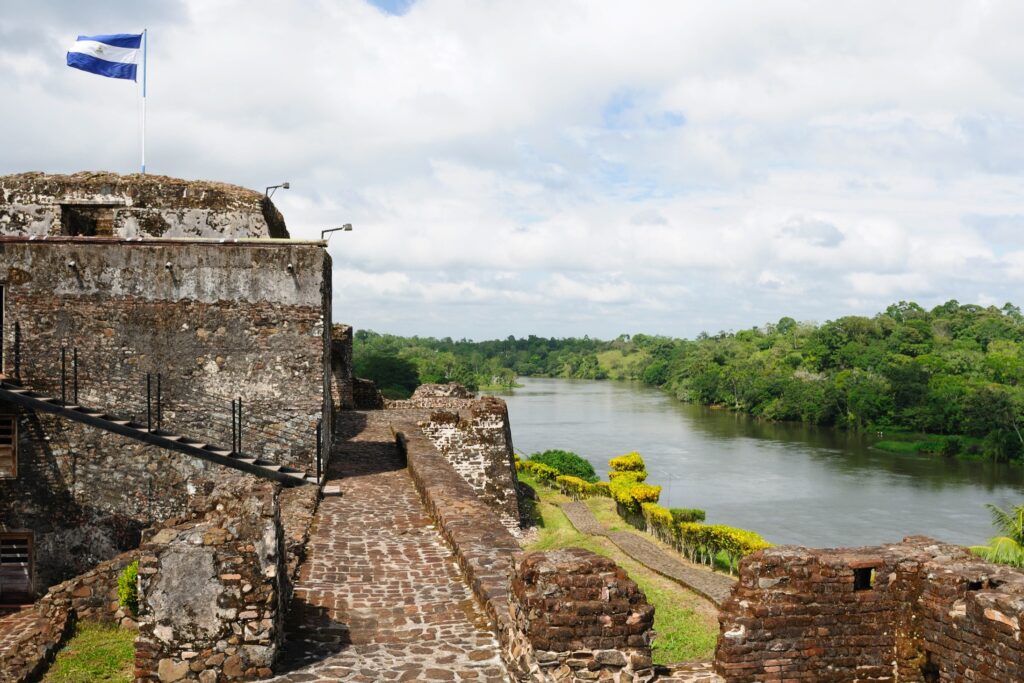
Rounding a bend, you’re greeted by a spectacular sight – on a rare hilltop, a vast stone-built Spanish fortress looms above white-water rapids and the squat, stilted houses of the quirky little port of El Castillo.

Stay at -
Luna del Rio
Day 18
Hike in Indo Maíz Biosphere Reserve & tour of El Castillo fortress.
Just 3km downstream from El Castillo lies the Indio‑Maíz Biosphere Reserve, an area dedicated to the preservation and study of its remarkable biological diversity. Set off with your guide along the 2km Bartola Trail, a well‑defined path that winds through forest rich with towering trees, oversized tropical plants with broad waxy leaves, and ferns that shelter tiny poison‑dart frogs no larger than a fingernail. With luck, you may spot a family of monkeys observing you from the safety of a high branch, or find a marching column of leaf‑cutter ants crossing your path.
El Castillo fortress, dates back to 1673 and was constructed by the Spanish to protect the affluent trading city of Granada from what they considered to be European pirates. Spend the afternoon exploring this formidable fortress with your guide who will narrate its extraordinary history, which included an assault by a youthful naval officer named Horatio Nelson. The expanisve views from the top, over uninterrupted rainforest are as impressive as the monumental stone walls and cannons themselves.

Stay at -
Luna del Rio
Day 19
Return to Granada for your final night
The return journey upriver to San Carlos takes 1½ hours, and from there it’s a further 5 hours by road back to Granada for your final night in Nicaragua.


Stay at -
Hotel Patio del Malinche
Day 20
Transfer to Managua airport for your international flight home.
Outline itinerary
Day 1
Arrive in San Salvador and transfer to your hotel.
Day 2
El Boqueron Volcano & San Salvador city tour
Day 3
Transfer to Ataco on the Ruta de las Flores.
Day 4
Exploring the Ruta de las Flores & Coffee Tasting
Day 5
Transfer to Suchitoto via El Tazumal, Santa Ana & Joya de Ceren
Day 6
Walking tour of Suchitoto.
Day 7
Transfer to Perquin.
Day 8
Visit Perquin's Museo de la Revolución and the nearby town of El Mozote.
Day 9
Transfer to La Union on the Gulf of Fonseca.
Day 10
Boat across the Gulf of Fonseca to Nicaragua; continue by road to Leon.
Day 11
Walking tour of Leon.
Day 12
Transfer to San Jorge port; ferry to Ometepe Island.
Day 13
Ometepe Island tour
Day 14
At leisure on Ometepe Island - optional hikes and cycle rides available.
Day 15
Return to San Jorge port by ferry; continue by road to the colonial city of Granada.
Day 16
Granada city tour, boat trip on Lake Nicaragua & Masaya volcano at night.
Day 17
Transfer to San Carlos; travel by boat along Rio San Juan to El Castillo.
Day 18
Hike in Indo Maíz Biosphere Reserve & tour of El Castillo fortress.
Day 19
Return to Granada for your final night
Day 20
Transfer to Managua airport for your international flight home.
Inspired by this trip
Our exciting range of articles on Latin America explore everything from iconic destinations and lesser-known cultural gems to delicious traditional recipes. You’ll also find exclusive travel tips, first-hand client reviews and the chance to get your personal questions answered by our travel experts.
Papagaio
Your edit for Latin American inspiration
Our exciting range of articles on Latin America explore everything from iconic destinations and lesser-known cultural gems to delicious traditional recipes. You’ll also find exclusive travel tips, first-hand client reviews and the chance to get your personal questions answered by our travel experts.
View Extraordinary Inspiration