Explore the last great wilderness on an expedition cruise with Journey Latin America – the UK’s leading Antarctica specialist.
The spectacle offered by the coldest place on Earth is at once alien and familiar, dazzling yet strangely austere. You may have seen thousands of photos before arriving, but be prepared to let go of your imagination and expectations as you set eyes on the White Continent itself. Holidays to Antarctica offer perhaps the ultimate wildlife experience – vast expanses of frozen desert, breathtaking ice sculptures carved by wind and water, and gigantic icebergs the size of small countries all combine to create a world like no other.
Your Antarctica expedition awaits
There are few places quite like Antarctica. In the clear light of the austral summer, penguins gather in vast colonies along rocky shores, humpback whales surface alongside your Zodiac and glaciers fracture with a sound like distant thunder. Leopard seals patrol the ice floes, wandering albatrosses ride the winds above the Southern Ocean and every landing reveals a landscape that feels almost untouched by humans.
Today’s Antarctica cruises are as immersive as they are spectacular. Beyond the wildlife encounters, there are opportunities to kayak among icebergs, camp on the continent itself and explore places that were once visited only by explorers and scientists. From historic whaling stations to remote beaches occupied by elephant seals, each day brings new encounters and a fresh perspective on this remarkable corner of the world.




Travellers rate our tours 97% on AITO and 4.9/5 on Tripadvisor!
Visit Antarctica for…
From penguin colonies numbering in the hundreds of thousands to humpback whales feeding in krill-rich waters, Antarctica rewards visitors with encounters few will ever witness. Here’s what draws travellers to the White Continent.
- Extraordinary wildlife – Walk among vast penguin colonies, spot leopard seals on ice floes and watch whales breach from your Zodiac.
- Dramatic landscapes – Navigate channels flanked by towering glaciers, sculpted icebergs and snow-covered peaks stretching to the horizon.
- Once-in-a-lifetime adventures – Kayak among icebergs, camp on Antarctic ice, snowshoe across frozen terrain or take the polar plunge.
- Expert-led expedition cruises – Onboard naturalists, glaciologists and historians share their knowledge through daily lectures and guided excursions.
- Sub-Antarctic islands – Extend your voyage to South Georgia’s king penguin colonies or the Falkland Islands’ remarkable birdlife.
- A pristine, protected wilderness – Antarctica is governed by the Antarctic Treaty, making it one of the last truly untouched places on Earth.


Why Antarctica with Journey Latin America?
We've been planning trips to Latin America since 1980 – and our team have lived, worked and travelled across the region ever since. That firsthand knowledge means we'll help you find the destination that suits you, from the routes worth taking to the places worth staying.
around you
our specialists
stays
by design
Antarctica holidays and tours
At Journey Latin America, we offer a range of Antarctica tours, including expedition cruises from Argentina via the Drake Passage and fly-cruise options departing from Chile. From Antarctic Peninsula voyages to extended expeditions visiting South Georgia and the Falkland Islands, our Antarctica travel experts will match you with the right itinerary
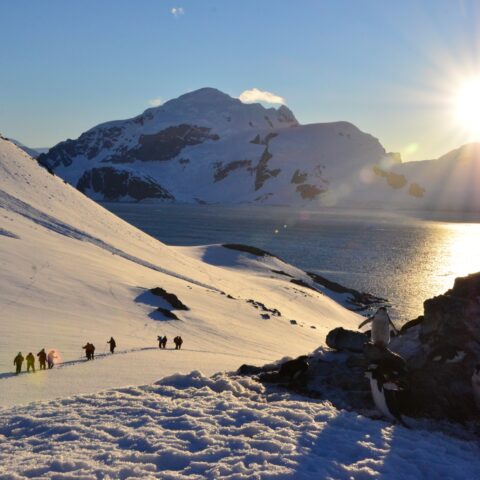

Private Journeys
Antarctica
Signature Antarctica: Highlights of the Antarctic Peninsula
13 days from £8,700pp
(based on two people sharing & excluding flights)
(based on two people sharing & excluding flights)
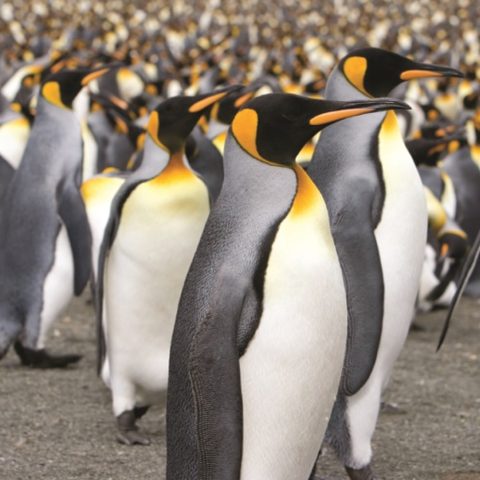

Private Journeys
Antarctica / Falkland Islands
Antarctica Wildlife: Falklands, South Georgia and the Antarctic Peninsula
23 days from £22,620pp
(based on two people sharing & excluding flights)
(based on two people sharing & excluding flights)
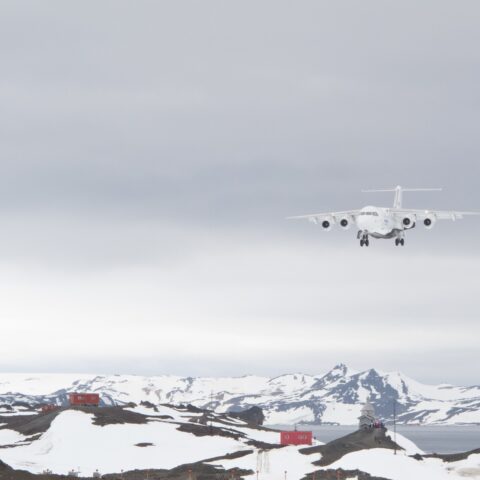

Private Journeys
Antarctica
Antarctic Peninsula: Fly and cruise
11 days from £14,240pp
(based on two people sharing & excluding flights)
(based on two people sharing & excluding flights)

Private Journeys
Antarctica
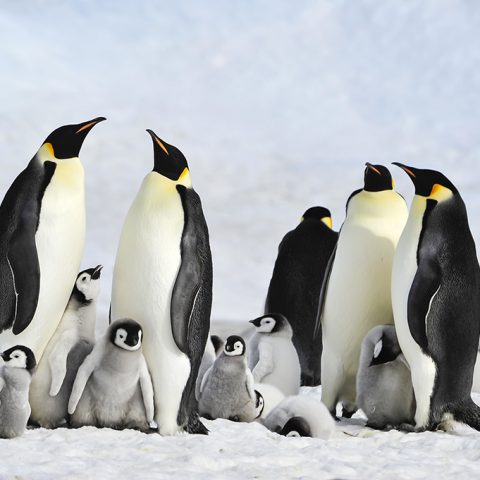
Antarctica: In search of the Emperor penguin
15 days from £14,580pp
(based on two people sharing & excluding flights)
(based on two people sharing & excluding flights)
Places to visit in Antarctica – expert tips and advice
Most Antarctica holidays explore the Antarctic Peninsula and South Shetland Islands – the most accessible and wildlife-rich part of the continent. Extended voyages venture further to the sub-Antarctic islands, where the wildlife spectacle rivals the Peninsula itself.


As the most accessible area of the continent, the Antarctic Peninsula hosts some of the most interesting scenery and wildlife, as well as many of the continent’s scientific bases.


You’ll spot an abundance of whales, seals, penguins and seabirds from the chain of rugged black rocks and glaciated islands hugging the Antarctic Peninsula.


This narrow island of glaciated alpine peaks, ice-scalloped fjords and protected valleys shelters a cornucopia of wildlife, including millions of penguins and seals.


Explore the wintry pack ice of the Weddell Sea on an expedition cruise to Antarctica with Journey Latin America.
Places to stay in Antarctica
Antarctica holidays take place aboard specialist expedition ships designed for polar conditions. These ice-strengthened vessels range from intimate ships carrying fewer than 100 passengers to larger vessels with more onboard amenities – but all feature comfortable cabins, expert expedition teams and Zodiac launching platforms for daily excursions.


When to visit
Antarctica welcomes visitors only during the southern hemisphere summer, from late October through March. During these months, temperatures along the Antarctic Peninsula hover around 0°C, occasionally reaching 10°C on milder days – a far cry from the continent’s fearsome winter, when temperatures plummet below −60°C and the sea ice becomes impenetrable.
A guide to the seasons
Early season (October-November) brings Antarctica’s awakening. Sea ice retreats, opening channels for expedition ships. Penguin colonies burst into activity as birds establish territories and begin courtship displays. The landscape is blinding white, with fresh snow covering rocky shores – ideal for photographers. Weddell seals haul out onto the ice to give birth, while crabeater seals gather on ice floes.
Mid-season (December-January) is the height of the Antarctic summer. Penguin chicks hatch across the Peninsula, creating frantic colonies as parents shuttle between nest and ocean. Extended daylight – with 24-hour sun at its peak – means maximum time for exploring. Humpback and minke whales arrive in increasing numbers, feeding on rich concentrations of Antarctic krill.
Late season (February-March) offers peak whale watching as humpback, killer and occasionally blue whales gather before their northern migration. Penguin chicks begin to fledge, testing their waterproof feathers for the first time. Retreating sea ice can open access to more southerly locations, including the Antarctic Circle and the Weddell Sea.


Start planning your Antarctica holiday today
You can contact our Travel Experts if you feel inspired to book a holiday. We have over 40 years of experience in organising award-winning trips to Central and South America, so you can trust us to book an exciting trip for you.
Things to do in Antarctica
Antarctica expeditions combine daily Zodiac excursions and shore landings with a growing range of active adventures. What you’ll do on any given day depends on weather, ice conditions and the wildlife – which is part of the thrill.


Enjoy an intense wilderness experience away from your cruise ship camping under the stars on the Antarctic ice.


Set sail from the tip of Patagonia to an awe-inspiring natural realm of ice, water and rock.


Visit the vestiges of Antarctica's discovery and human exploitation: the explores' huts, whaling and sealing stations, administrative outposts; all testament to the region's stormy history.


Take to the water in the Southern Ocean on a thrilling sea-kayaking expedition from your Antarctic cruise ship.
FAQs about visiting Antarctica
If you’re considering an expedition to Antarctica for the first time, you’re bound to have questions about how to get there, what to expect and when to go. Here, our experts share their insights.
What is the best time to visit Antarctica?
It depends on what you want to see. December and January bring the warmest temperatures, longest days and peak penguin chick activity. February and March are best for whale watching, with humpback and killer whales gathering in large numbers. October and November appeal to photographers, with pristine snow cover and penguin courtship displays. There’s no single ‘best’ time – each period has a distinct character.
What other destinations does Antarctica combine with?
The vast majority of Antarctic cruises begin in Ushuaia, located at the southern tip of Argentina. This makes exploring the rest of Argentina perfect for anyone wanting to extend their trip of a lifetime, with Buenos Aires, Salta, Mendoza, Iguazu Falls, the Valdez Peninsula and Patagonia, just some of the fantastic options. The fly-in cruises begin in Chile, making them easy to combine with a trip to Santiago, the Atacama Desert, the Lake District, Torres del Paine and even mystical Easter Island. Many other options throughout Latin America are available however, so just get in touch to discuss which one is right for you. Within an Antarctic cruise itinerary there are options to include the Falkland Islands and South Georgia, both magical wildlife experiences in their own right.
How do I get to Antarctica?
There are no direct flights from the UK to Antarctica. Most visitors take a cruise from Ushuaia, a port on the island of Tierra del Fuego at the southern tip of Argentina, via a flight from Buenos Aires. There are also fly-cruises from Punta Arenas in Patagonian Chile, which require a stop in the capital Santiago.
Can I visit Antarctica without going on a ship?
There is very little infrastructure in Antarctica, with only small groups of scientists and researchers braving the cold for more than a few weeks at a time. There are no roads, houses, hotels or restaurants and while there are occasional temporary camps that tourists can fly to, these tend to be extremely expensive and don’t offer the variety of wildlife or scenery that expedition cruises provide.
Will I get seasick in Antarctica?
The waters around the Antarctic Peninsula tend to be very calm and stable, so once you have made it to the outlying islands of the South Shetlands, seasickness is generally not an issue. However, most voyages depart from Ushuaia in Argentina and head south across the infamous Drake Passage to reach the White Continent. The Drake marks the convergence zone between the Atlantic, Pacific and Southern oceans and the differing currents and water temperatures combine to form one of the choppiest stretches of water in the world. Many people see the Drake as a rite of passage that must be crossed in order to truly say you have been to Antarctica. And modern technology is making the journey far easier than it ever has been before. Clever bow designs and retractable stabilizers allow some vessels to ease the severity of the stirring, while more efficient engines have cut the crossing time to as little as 1.5 days on the fastest liners. But, for those still keen to avoid it, there are options. Several operators have fly-in itineraries that hop over the Drake by air between southern Chile and King George Island, from where more settled waters carry you towards the mainland. Other routes travel via the Falklands and/or South Georgia, which avoids the convergence zone and approaches the peninsula from calmer water to the east, meaning they only cross the Drake once, on the way back to Argentina. If you are concerned about seasickness, speak to our team to discuss the best solution to suit you.
How fit do you need to be to visit Antarctica?
To get the best out of your visit you should have a reasonable level of mobility and be able to hike over uneven ground and thick snow for up to 10 minutes. However, passengers are normally given three walk difficulty options per landing, offering varying degrees of exertion, and as long as you are able to climb in and out of a Zodiac (inflatable raft), you will still be able to experience some of the wonders that Antarctica has to offer. Wildlife, such as penguins and seals, tend to gather near the water’s edge, meaning you rarely need to walk far (if at all) to be amongst the action. Zodiac cruises can also give you close-up encounters without even needing to make landfall.
How much is an Antarctic cruise?
Antarctic expedition cruises span a huge range of prices that can vary based on the chosen ship, cabin, itinerary, departure date and time of booking. Due to the costs involved with maintenance, supply chains, fuel and port fees, in one of the most remote places on Earth, along with the need to avoid turning Antarctica into a mass tourism destination, none of the options will be “cheap”, however their value for money is rarely (if ever) questioned by those who have been. Whatever your budget, if you dream of going to Antarctica, get in touch with our team and we can help to ensure you have access to the best options and prices, including offers that will not be advertised on our website.
What is the difference between an “expedition” cruise and a “regular” cruise?
All of our Antarctic cruises are categorised as “expeditionary” in nature. This term denotes that the objective of the cruise is to give you the best possible chances of seeing the scenery and wildlife that makes the region so special. If, for example, a pod of whales appears next to the ship in the middle of the night, there is a good chance that a call will go out over the tannoy system so that those who want to, can make their way out on deck to get a glimpse and take a photo. It also means that the itinerary is never fixed. If you are due to make a landing on one island, but the spotters have seen something of interest on the neighbouring island, the crew will do what they can to get approval to land there instead. Equally, weather will often play a role in shaping your exact course. Also, while “regular” cruise passengers may be used to cabaret shows or other similar entertainment in the evenings, expedition cruises tend to have lectures or documentary screenings, with parties generally restricted to the final night.
How far in advance should I book an Antarctic cruise?
Expedition cruise operators will often open bookings around 18 months prior to the start of each Antarctic season. Booking as early as possible gives you access to the best flight prices, your preferred ship and cabin, and ensures availability in other locations you may wish to add to your holiday, such as Patagonia, which can sell out fast. There are also likely to be a range of early booking offers available for most ships, cabin types, itineraries and departure dates. These offers are increasingly becoming the best available at any point throughout the booking period. Occasionally operators will release a flash sale which can look like a better deal, but often these arrive late, when flight prices are high, and can come with many restrictions that involve making some form of compromise.
Which is better, the Arctic or the Antarctic?
As with all tourist destinations, the issue of where is better to go between the Arctic and Antarctic depends much on the person going there. The Arctic has highlights like Inuit cultures, polar bears and walruses, with relatively low flight and cruise prices compared to its southern counterpart, but Antarctica is more pristine, with more epic icescapes and is of course home to penguins. Both also have various species of seals, whales and birds, and a rich history of exploration. In the polar bear versus penguin debate, it is important to remember that Antarctic fauna poses no threat to humans, so visitors are able to get much closer to the wildlife than those travelling north where there are much stricter limits in place on where visitors may roam.
What wildlife will I see in Antarctica?
Wildlife sightings are virtually guaranteed. On the Antarctic Peninsula, you’ll encounter gentoo, Adélie and chinstrap penguin colonies, along with leopard seals, Weddell seals, crabeater seals and a rich variety of seabirds. Humpback and minke whales are common from December onwards. Extended voyages to South Georgia add king penguin colonies and elephant seals, while the Falkland Islands are home to five penguin species and black-browed albatrosses.
Is it worth going to the Falklands and South Georgia?
While the Antarctic Peninsula has gigantic glaciers and enormous icebergs calved by nature into ornate and inspiring shapes, its extraordinary wildlife offering is actually upstaged for many, by the more northerly islands of the Falklands and South Georgia. The Falklands, along with fascinating war history, give visitors the slightly odd opportunity to witness penguins waddling across a lush green meadow, or elephant seals battling on a beautiful white sand beach. It almost never snows here, so while the winds can be just as bracing as in Antarctica, its scenery is very different and there are three penguin species here that you won’t find on the peninsula. South Georgia, located further to the south and east, has landscapes more in keeping with Antarctica, but its wildlife quantities are seen almost nowhere else on Earth. Anyone interested in spotting king penguins should make this a priority, as almost half a million pairs make this island their home.
Can I see the aurora in Antarctica?
The aurora (more commonly known as the northern or southern lights) are a phenomenon caused by solar winds hitting the Earth’s magnetosphere and are most frequently seen around the Arctic and Antarctic circles. While solar winds travel towards us all year round, in order to see their effects, there must be almost complete darkness. During much of the Antarctic cruise season, owing to the region’s southerly latitudes, there is close to 24-hour daylight throughout, making it rare for visitors to see the lights. However, those travelling in October or March stand the best chance.
Are Antarctic voyages good for solo travellers?
In many ways Antarctica is perfect for solo travellers. Some operators offer single cabins, some offer willing shares (meaning solo passengers will be paired with another solo passenger of the same gender and not have to pay a single supplement), and some charge low supplements for those wanting a twin/double cabin for solo use. Onboard, you are likely to find a number of other like-minded solo travellers, and dining tables on most ships are deliberately large, encouraging people to interact with strangers and expedition team members. Whether it’s the Drake Passage, the scenery or the wildlife, there is always an exciting topic with which to break the ice!
Which ship should I choose for my Antarctic voyage?
Journey Latin America has been selling expedition cruises to Antarctica since the early days of tourism in the region. Our partners are tried and tested and have been carefully chosen to give us a comprehensive range of prices, itineraries, capacities, excursions and levels of luxury. You can see an overview of our selection here: Antarctica Compare Ships – Journey Latin America, but our Travel Experts are on hand to give you detailed and impartial advice to find the options best suited to your budget and requirements.
Will there be Wi-Fi on my Antarctic cruise?
Although travelling to Antarctica will be seen by many as a great excuse to escape the online world and truly tune in to the nature and beauty of this untouched wilderness, for those needing to stay connected there are now several vessels that offer Wi-Fi connectivity. The quality of the connection cannot be guaranteed but is generally improving as technology evolves. Some operators may charge, while others will include it in the cabin rate. If Wi-Fi is important to you, please let us know when enquiring so that we can match you to a suitable vessel.
What should I pack when travelling to Antarctica?
Most of our expedition cruise operators will include a warm windproof jacket, which you collect onboard and can often take home afterwards. Most will also have waterproof rubber boots for guests to borrow during landings and Zodiac cruises. Temperatures in the Antarctic summer can feel surprisingly warm, especially when walking, so layers are key. Onboard the ship, most passengers choose comfort over style. On the vast majority of vessels there is no dress code at all, but although it is not mandatory, we recommend taking a relatively smart outfit for one or two evening events. Silversea operate a fairly strict dress code, so passengers travelling with them should check their documents for details.
What is the currency in Antarctica?
On board your cruise ship you can usually use US dollars or Euros to pay for goods and services. The most popular credit cards are also commonly accepted. You may be lucky enough to visit the “Penguin Post Office” at Port Lockroy. To purchase postcards, stamps or souvenirs here, you can use US dollars, Euros or Sterling, but credit cards are not yet accepted. The Falkland Islands use their own version of the pound, but British pounds are equally valid currency. Many shops willingly accept US dollars or Euros, and most will allow you to pay with credit or debit cards as well.
What is the time difference between Antarctica and the UK?
Time zones can be complicated in Antarctica due to territorial claims and its position at the bottom of the globe. However, in practical terms, visitors need only know that most ships operate using Argentina’s time zone (UTC -3), as this is usually the point of embarkation. The Falkland Islands also use UTC -3, while South Georgia officially uses UTC-2.
Do I need a visa for Antarctica?
As no country owns Antarctica, there are no visas required. To reach Antarctica via either Argentina or Chile, holders of a full British passport do not require a visa, although passports must be valid for at least 6 months after the trip begins. Anyone with a different nationality should enquire with us or check with the relevant consulate. If flying to the US, or via the US you will need to fill in your online ESTA application.
What vaccinations do I need for Antarctica?
Please check Travel Health Pro for information on health recommendations and vaccinations for the destinations you are visiting. Please note that many Latin American countries require proof of vaccination against Yellow Fever if you have recently travelled to another country where Yellow Fever is present.


Expert tips on visiting Antarctica
“Book early for peak-season departures in December and January – popular voyages often sell out 12-18 months ahead. But if you’re flexible on dates, late-season sailings in February and March can offer extraordinary whale encounters and the chance to push further south as the sea ice retreats.”
Ready to plan your 2026/27 Antarctica holiday?
You can contact our Travel Experts if you feel inspired to book a holiday. We have over 40 years of experience in organising award-winning trips to Central and South America, so you can trust us to book an exciting trip for you.
Papagaio
Your edit for Latin American inspiration
Our exciting range of articles on Latin America explore everything from iconic destinations and lesser-known cultural gems to delicious traditional recipes. You’ll also find exclusive travel tips, first-hand client reviews and the chance to get your personal questions answered by our travel experts.
View Extraordinary Inspiration