Discover Guatemala: Inspired by Celebrity Race Across the World

If like us, you’re gripped by the new series of BBC1’s Celebrity Race Across the World, then you’ll also be wishing you could experience all the incredible destinations they’re sprinting through across the Caribbean and Pacific coast of Central America – albeit at a slower, more relaxed pace. After all, the only taxing thing you’ll have to worry about on a Journey Latin America adventure is what to pack.
While the teams of celebrities make their way to the finish line in Península de La Guajira in Colombia over six episodes, their first checkpoint was in Flores in Guatemala. If you caught the show, then you’ll have barely registered the rainbow-coloured waterfront city, with its pretty painted houses and tangled web of streets. That’s where we come in. Guatemala shouldn’t be rushed.
Why this small country deserves more time
The Celebrity Race Across the World Guatemala leg showcased just a glimpse of this remarkable Central America destination. Wedged between Mexico to the north, Belize to the northeast, Honduras to the east, and El Salvador to the southeast, Guatemala offers more diversity per square kilometre than almost anywhere else in the region. While the celebrities raced through, travellers who take their time discover why this small country punches well above its weight when it comes to natural beauty, ancient ruins and vibrant Maya culture.
Why Guatemala deserves more than a checkpoint
In the heart of Central America, Guatemala packs extraordinary diversity into a compact country. From the volcanic peaks that ring shimmering highland lakes to the steamy jungles concealing ancient Maya ruins, this is a destination that rewards those who linger. The celebrities raced through in days. But you can experience it for weeks.
Colonial Antigua sits cradled by three volcanoes, its cobbled streets lined with Spanish colonial architecture and flower-adorned courtyards. Highland villages around Lake Atitlán preserve Maya traditions stretching back centuries, their weekly markets a kaleidoscope of handwoven textiles. Hidden in the northern jungle, Tikal’s towering temples rise above the rainforest canopy. And in the steamy east, the Rio Dulce winds through dense jungle to the Afro-Caribbean town of Livingston on the Caribbean coast, a world apart from the rest of Guatemala.
Getting to Guatemala
Most international visitors fly into La Aurora International Airport in Guatemala City. The capital serves as the main gateway, with La Aurora International Airport offering connections across Central America, North America and beyond. From Guatemala City, you can easily reach Antigua (under an hour), arrange domestic flights to Flores for the Mayan ruins of Tikal, or catch shuttles to Lake Atitlán. Many visitors use Guatemala City as a base for day one before heading to the country’s highlights.
Not to be missed in Guatemala
Flores: Gateway to the Maya world
The celebrities barely had time to appreciate Flores, but this lakeside town on an island in Lake Petén Itzá is more than just a checkpoint. Its cobbled streets wind between brightly painted colonial buildings in shades of mango, turquoise and coral. Flores serves as the perfect base for exploring Tikal, with restaurants serving everything from street tacos to fresh-caught fish from the lake. The town itself deserves a sunset stroll along the waterfront, watching fishing boats bob on the water as the sky turns pink behind the distant jungle canopy. If you’ve got energy after the climb to Tikal’s pyramids (around 90 minutes away), hike up to the hilltop mirador for views across the lake and the endless jungle beyond.
Lake Petén Itzá, Guatemala’s second-largest lake, provides a tranquil setting for Flores. The island town is dotted with small museums, art galleries and souvenir shops, while tour agencies line the streets offering trips to nearby ancient ruins. Visitor numbers peak during the dry season, but Flores maintains its charm year-round.
Tikal: Mayan ruins rising from the tropical jungle
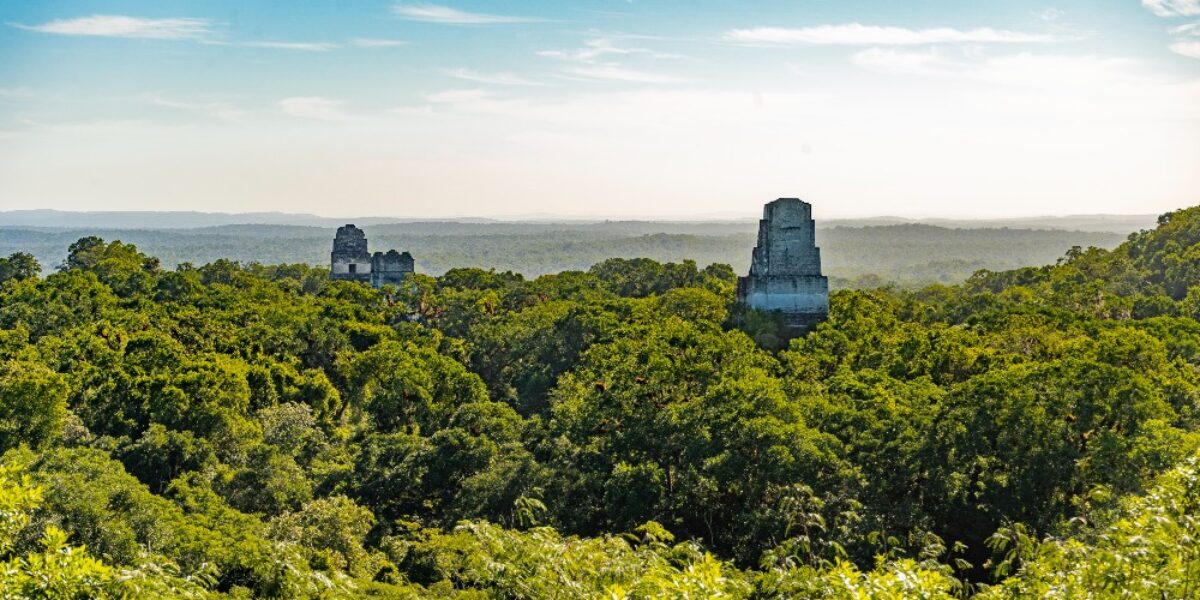
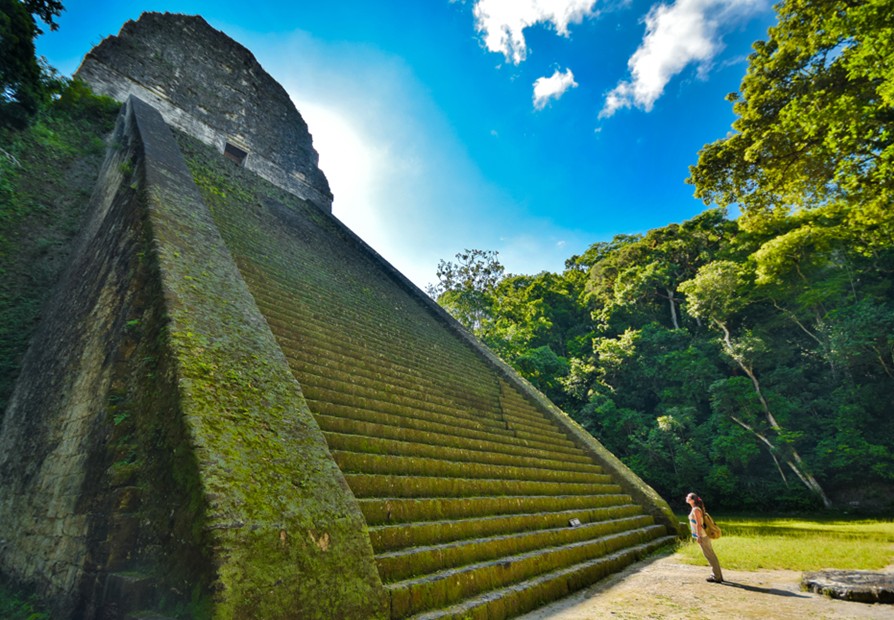
Deep in the jungles of the Petén, Tikal is one of the most magnificent Maya sites in existence. This was once a great city-state, home to perhaps 100,000 people at its peak around 700 AD during the Classic period. Today, temples tower above the forest canopy, their stepped pyramids rising up to 65m. Howler monkeys roar in the treetops. Toucans and parrots flash through the branches. And spider monkeys crash through the canopy overhead.
Temple IV is the tallest structure, and climbing the wooden staircase to the top rewards you with views across the jungle sea to other pyramids poking through the green. The Great Plaza, flanked by Temple I (Temple of the Great Jaguar) and Temple II (Temple of the Mask), is Tikal’s ceremonial heart. Despite the crowds, Tikal retains its power to awe. The site covers 16sq km, so there’s space to explore quieter corners beyond the main temples.
The ruins of Tikal stand as a testament to the sophistication of the Maya people and their architectural achievements. These ancient ruins, reclaimed by tropical jungle over centuries, offer unparalleled insight into Classic-period Maya civilisation. Wildlife thrives here, with the protected forest providing sanctuary for species found nowhere else in Central America.
Antigua and the highlands
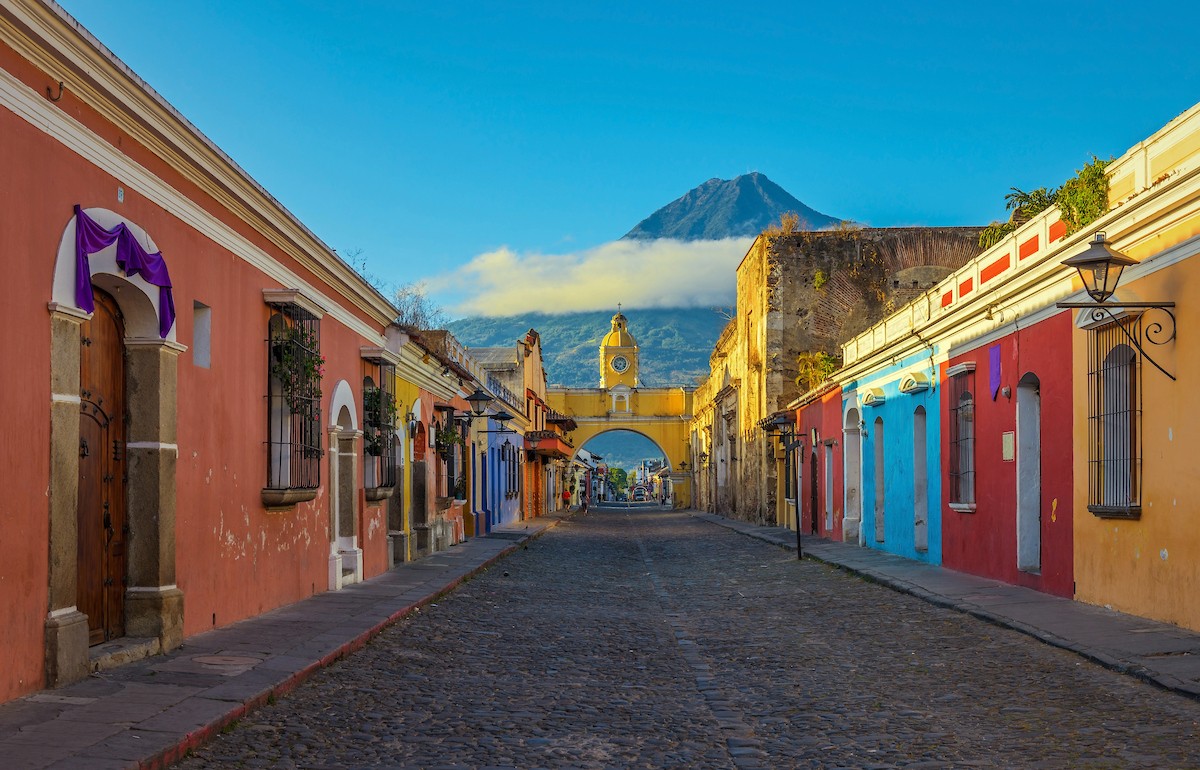
Guatemala’s former Spanish capital is the country’s most enchanting colonial city. Shady plazas buzz with life while cobbled streets lead past church ruins and baroque facades decorated in ochre and turquoise. Antigua sits in a valley surrounded by three striking volcanoes – Agua, Acatenango and Fuego, the latter still regularly belching smoke and ash. The setting is dramatic, particularly at sunset when the peaks glow pink above the terracotta rooftops.
Antigua is Guatemala at its most accessible. You can wander between cafes serving locally grown coffee, browse markets where vendors sell handwoven textiles, and duck into courtyards bursting with bougainvillaea. For the adventurous, hike Acatenango volcano for front-row views of Fuego’s eruptions lighting up the night sky. Close by, highland villages including Chichicastenango, with its famous Thursday and Sunday markets, or the traditional weaving centre of San Antonio Palopó – give an unfiltered insight into ancient Maya culture.
Lake Atitlán: The most beautiful lake in the world
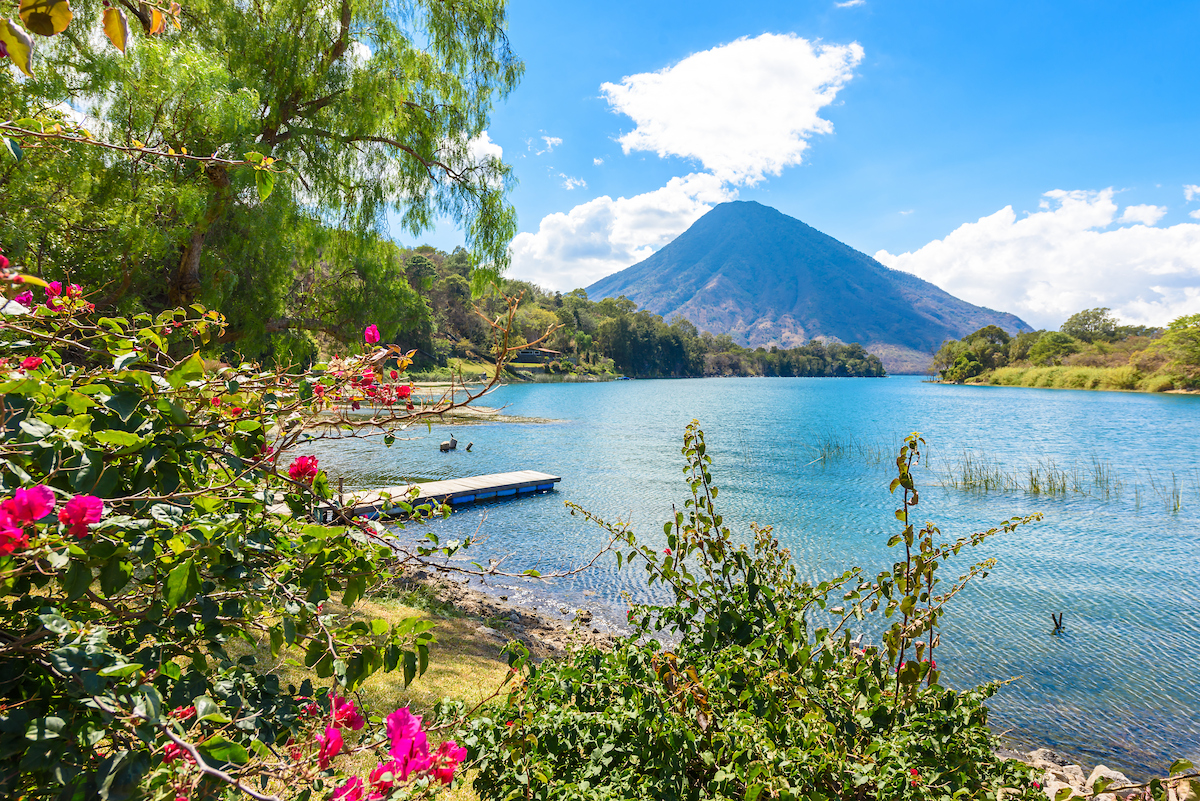
Few lakes can match Atitlán for sheer drama. Ringed by three towering volcanoes and fringed with traditional Maya villages, it’s often called the most beautiful lake in the world. The water shimmers cobalt blue beneath volcanic peaks, while pine forests cloak surrounding hills. Small boats ferry visitors between villages, each with its own weaving traditions and market days.
This stunning caldera lake, formed by volcanic activity around 84,000 years ago, is the deepest lake in Central America. The villages surrounding Lake Atitlán maintain traditions stretching back centuries, with the Maya people continuing to speak indigenous languages and wear distinctive traditional dress.
San Pedro La Laguna
San Pedro La Laguna draws backpackers with its laid-back vibe and Spanish schools – many travellers come here to learn Spanish while enjoying stunning views across the lake. Volcán San Pedro looms behind the town, and hiking the San Pedro volcano offers panoramic views across Lake Atitlán and the neighbouring peaks. The trek takes around five hours return and rewards with breathtaking vistas.
San Juan La Laguna
San Juan La Laguna is known for its weaving cooperatives, where you can watch textiles being made on backstrap looms, the colours derived from natural dyes. This village has become a centre for sustainable tourism, with women’s cooperatives offering demonstrations of traditional Maya textile arts. Art galleries showcase local painters whose work draws on Maya cosmology and the lake’s natural beauty.
San Marcos La Laguna
San Marcos La Laguna appeals to yoga enthusiasts seeking tranquillity. This quieter village on Lake Atitlán’s northern shore has become a wellness destination, with meditation centres, holistic therapies and vegetarian restaurants dotting the waterfront.
Santiago Atitlán
Santiago Atitlán, the largest lakeside town, is where you’ll find women in traditional purple-striped huipiles and men in embroidered trousers. This is Lake Atitlán at its most traditional, where Maya culture remains vibrant, and Tz’utujil is spoken as widely as Spanish.
Santa Cruz La Laguna and Santa Catarina Palopó
Santa Cruz La Laguna is accessible only by boat, lending it a secluded atmosphere. Meanwhile, Santa Catarina Palopó delights with its houses painted in vivid blue geometric patterns – a recent tradition that has transformed this small village into one of Lake Atitlán’s most photogenic spots.
Stay in one village and day-trip to others, or move around to experience the lake’s different personalities. Either way, give yourself several days – Atitlán needs to be explored at a slower pace. The other volcanoes framing the lake – Volcán Atitlán and Volcán Tolimán – complete the dramatic skyline of these immense volcanoes that so impressed Huxley.
Caribbean coast: Rio Dulce and Livingston
Guatemala’s Caribbean coast feels like a different country. Here, Spanish gives way to Garifuna and Q’eqchi’ Maya. Colonial architecture is replaced by wooden houses on stilts. And instead of volcanoes, you’ll find steamy jungle, mangroves and the wide waters of the Rio Dulce.
The Rio Dulce (Spanish for sweet river) winds 43km from Lake Izabal to the Caribbean Sea at Livingston. The journey by boat is Guatemala at its most striking, gliding past jungle-clad canyon walls where egrets perch and glimpses of remote eco-lodges hidden in dense vegetation. En route, stop at the 17th-century Castillo de San Felipe, a Spanish fort built to fend off pirates who sailed up from the Caribbean.
Livingston itself is Guatemala’s only predominantly Afro-Caribbean town, home to the Garifuna people. The vibe here is utterly different from the rest of Guatemala. You’ll hear reggae spilling from bars and smell coconut-rich tapado stew simmering in kitchens.
Livingston is accessible only by boat – there are no roads in – which has helped preserve its distinctive culture. It’s not about sights but soaking up the atmosphere, wandering the main street, trying rice and beans, and perhaps taking a boat to the freshwater pools at Siete Altares or Playa Blanca for a swim.
Lanquin and Semuc Champey
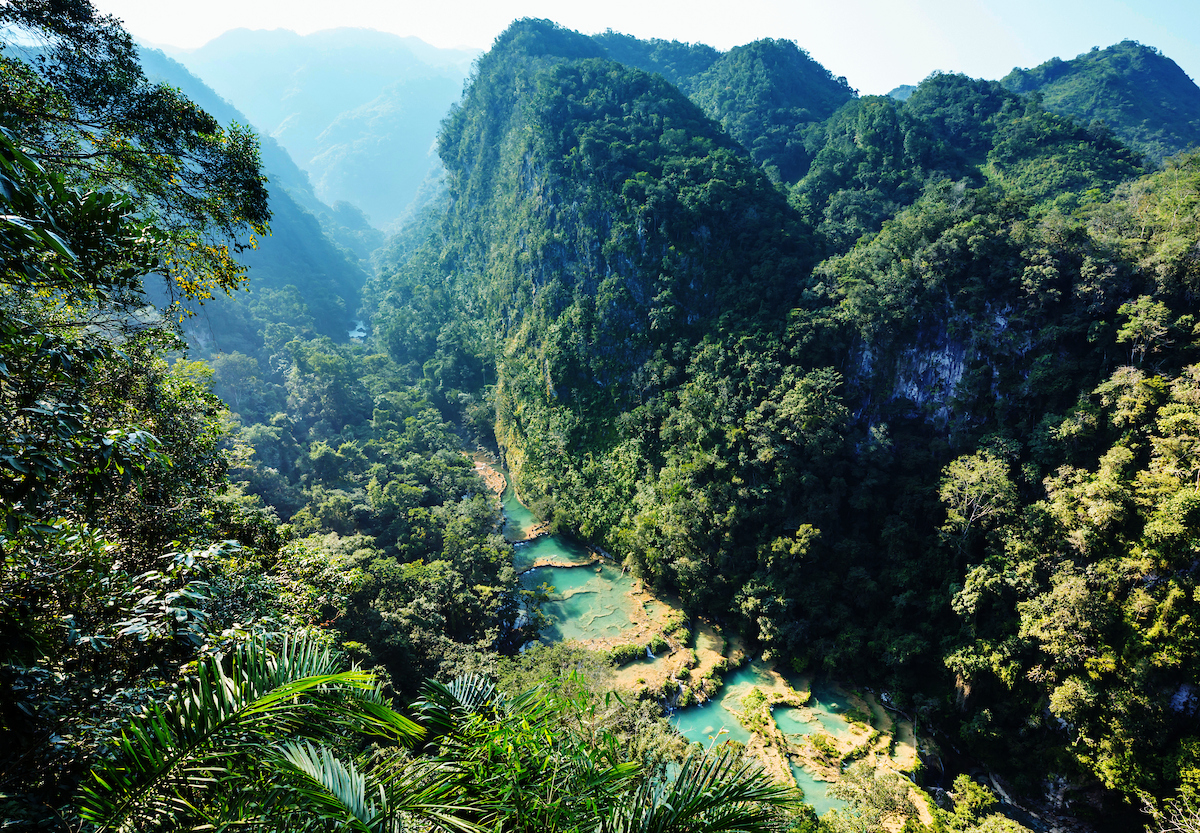
If you’re willing to endure a bumpy road journey into Guatemala’s mountainous heart, Semuc Champey rewards with one of Central America’s most extraordinary natural wonders. This series of stepped turquoise pools sits atop a natural limestone bridge, beneath which the Cahabón River flows. The name comes from Q’eqchi’ Maya and means, ‘where the river hides under the earth’.
The pools themselves are stunning – crystal-clear water in shades ranging from jade to sapphire, stepped down a 300m limestone formation. Dense jungle surrounds the site, with the sounds of tropical birds and the rush of water. Hike up to El Mirador viewpoint for the classic aerial view (about 45 minutes uphill in the heat), then cool off with a swim in the pools. The water is refreshingly cool, and you can clamber from one pool to another, finding your own quiet spot if you arrive early.
The base for visiting is Lanquin, a small Q’eqchi’ Maya town in the misty highlands. Getting here requires commitment – it’s eight to 10 hours by shuttle from Antigua or Flores along winding mountain roads. Beyond Semuc Champey, there’s the K’an Ba cave, where you explore underground river passages by candlelight, tubing down the Cahabón River, and unwinding in the jungle away from crowds. Most accommodation is rustic – jungle lodges strung with hammocks overlooking the river – but that’s part of the off-grid appeal.
When to visit: Dry season, rainy season and year-round travel
Guatemala’s climate varies significantly between the dry season (November to April) and the wet season (May to October). The dry season offers the best weather for outdoor adventures – hiking volcanoes, exploring Maya ruins and boat trips across lakes. November through April sees clear skies and minimal rainfall, making this peak season for visitor numbers.
The rainy season brings afternoon showers, but shouldn’t put you off. Morning adventures remain perfectly possible, and the tropical jungle is at its most lush. September and October see the heaviest rainfall. However, Guatemala remains a year-round destination, with highland temperatures staying pleasant even during the wet season.
Plan your Guatemala adventure
Guatemala should be on your travel wish list. Explore colonial cities, volcanic lakes, Caribbean coast and Maya ruins in two to three weeks – not days. Whether you’re inspired by Celebrity Race Across the World or drawn to Guatemala’s mix of Maya culture, colonial heritage and natural beauty, Journey Latin America can create a tailor-made itinerary that moves at your pace. No checkpoints. No racing. Just Guatemala as it deserves to be experienced.
Contact our Latin America Travel Experts to start planning your Guatemala adventure today. This post was sponsored by our partners at INGUAT Guatemala Tourism Board.

Tailor-made holidays
Flexible, custom-made holidays to Latin America created to match your exact requirements: our tailor-made itineraries are as unique as the clients for whom they are designed.
Design my tripPapagaio
Your edit for Latin American inspiration
Our exciting range of articles on Latin America explore everything from iconic destinations and lesser-known cultural gems to delicious traditional recipes. You’ll also find exclusive travel tips, first-hand client reviews and the chance to get your personal questions answered by our travel experts.
View Extraordinary Inspiration